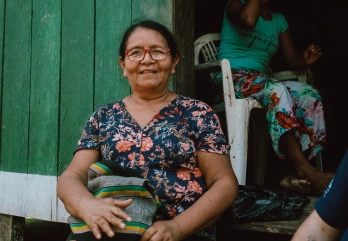
Some types of silence are painful. For a grandmother from the Ticuna tribe, the most painful silence was in her hands. Because she could not see clearly, she was losing her greatest treasure: the art of weaving with chambira fibers. She wasn’t just losing her sight; she was afraid her family’s history was about to end.
With a sad voice, she told us how her grandchildren would sit next to her with the materials ready, waiting to learn. But she could only feel frustrated because her eyes could no longer guide her fingers.
When our mission team gave her a pair of glasses, we gave her more than just clear vision. We gave her back her life’s work. Her eyes, as deep as the river, filled with happy tears. She realized her legacy was safe. “Now I can finally teach them,” she said with a smile that moved our hearts. She knew that her traditions would live on through her grandchildren.
As we left, we understood that our work on the boat is about more than medicine. That day, we helped a grandmother keep her culture alive. We helped her make sure that the story of her people continues, one stitch at a time, from one generation to the next.